logo

EZHOU ANJEKA TECHNOLOGY CO.,Ltd Anjeka@anjeka.net 86-0711-5117111

Os nossos produtos
Produtos recomendados
Sobre nós
Por que escolher-nos
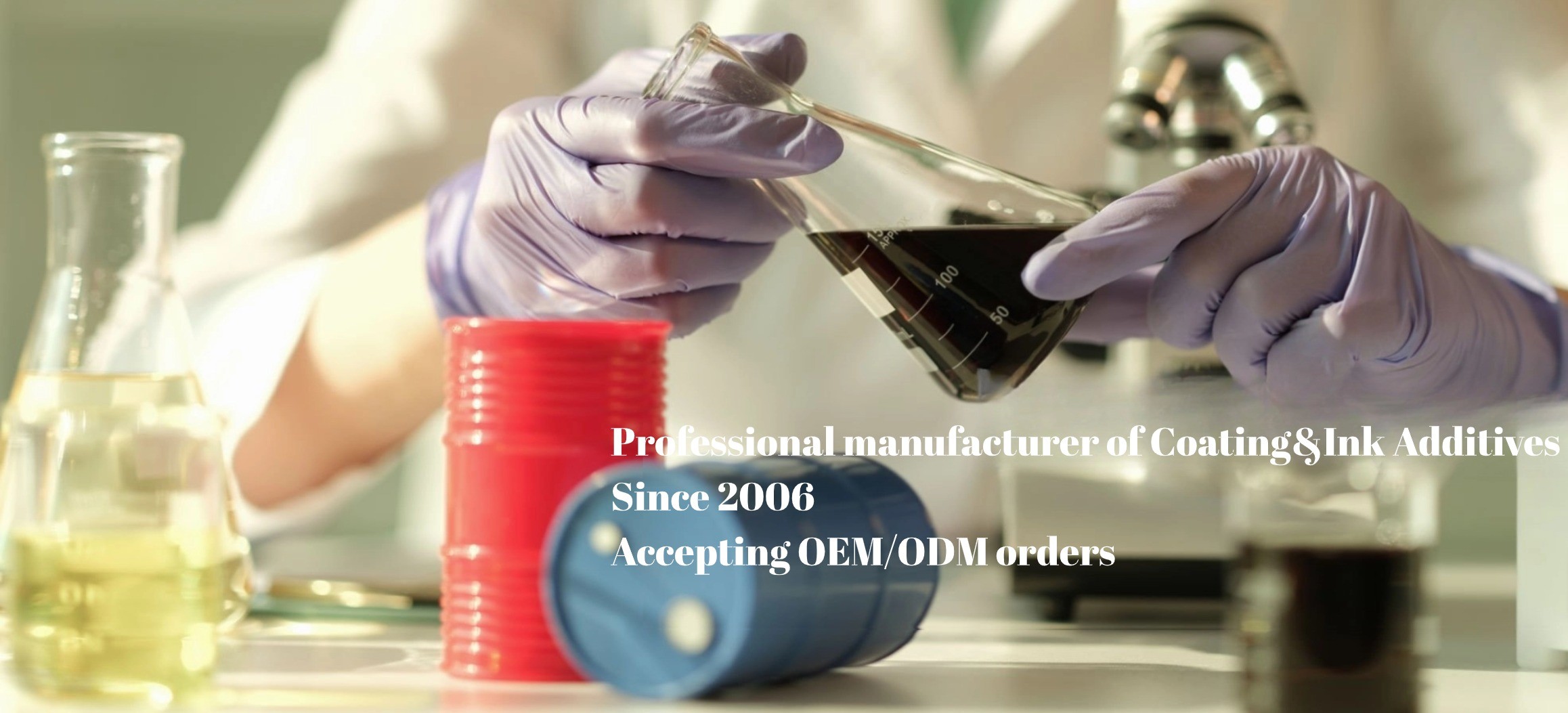
A Anjeka foi fundada em 2006.Os nossos produtos principais são revestimentos, tinta e aditivos adesivos. Integramos a P&D/produção/vendas e pós-venda
Veja mais
EZHOU ANJEKA TECHNOLOGY CO.,Ltd

Alta Qualidade

Selo de confiança, verificação de crédito, RoSH e avaliação da capacidade do fornecedor. A empresa tem um rigoroso sistema de controlo de qualidade e um laboratório de teste profissional.
EZHOU ANJEKA TECHNOLOGY CO.,Ltd

DEVOLVIMENTO

Equipe interna de projeto profissional e oficina de máquinas avançadas. Podemos cooperar para desenvolver os produtos de que necessita.
EZHOU ANJEKA TECHNOLOGY CO.,Ltd

Fabricação

Máquinas automáticas avançadas, sistema estritamente de controlo de processos. Podemos fabricar todos os terminais elétricos além da sua demanda.
EZHOU ANJEKA TECHNOLOGY CO.,Ltd

100% SERVIÇO

Embalagens a granel e pequenas embalagens personalizadas, FOB, CIF, DDU e DDP. Deixe-nos ajudá-lo a encontrar a melhor solução para todas as suas preocupações.

2006

Ano de criação

>50+

Empregados

20000+

Clientes atendidos

>80 million+

Vendas anuais

Os nossos produtos

Produtos destacados

China EZHOU ANJEKA TECHNOLOGY CO.,Ltd
Contacte-nos
Reproduzir vídeo
Contato a qualquer momento
Enviar

EZHOU ANJEKA TECHNOLOGY CO.,Ltd

Endereço: Centro de I&D: Edifício 19, Fase III, Gaoxin Smart City, Zona de Desenvolvimento de Gedian, cidade de Ezhou, província de Hubei, China
Fax: 86-0711-3809626
Telefone: 86-0711-5117111
Os nossos produtos
PRINCIPAIS PRODUTOS
Mais Produtos
Os nossos casos
Projetos industriais recentes
Últimos casos de empresas sobre Core Challenges in Balancing Performance, Cost, and Stability
2025/12/08
Core Challenges in Balancing Performance, Cost, and Stability
In modern formulation development, additives are no longer just “performance enhancers.” They play a critical role in balancing three often competing priorities: performance, cost, and stability. Choosing the right additive requires a clear understanding of your system and the trade-offs involved, as each decision can impact multiple aspects of the final product.   Formulators often face three major, interconnected challenges when selecting additives:   Performance vs. Cost Premium additives may deliver excellent wetting, dispersing, defoaming, or leveling, but come at a higher price. Lower-cost alternatives can reduce upfront costs but may compromise performance or cause defects. Performance vs. Stability Some high-performance additives perform well under mild lab conditions but destabilize the formulation under heat, shear, or extreme pH. Ensuring long-term stability while maintaining effectiveness is key. Cost vs. Stability Cheaper additives might save money initially, but they can lead to shorter shelf life, rework, or production delays—ultimately increasing total cost of ownership.   Selecting the right additive isn’t about picking the “strongest” one—it’s about choosing the one that fits your system. Start by understanding your formulation and its challenges. Focus on the performance attributes that matter most. Adjust dosage and the order of addition carefully. Finally, test additives under conditions that match real production to avoid surprises later. Cost should always be weighed against potential losses from instability or defects.   Balancing performance, cost, and stability is a key challenge in modern formulation development. With a thorough understanding of the system, careful additive selection, and realistic testing, formulators can achieve optimal results that meet both technical and commercial goals.   Interested in learning how additive strategies can optimize your formulation development? Contact us or explore our resources to see how careful additive selection can improve performance, reduce costs, and enhance stability in real-world applications.
Últimos casos de empresas sobre Defoamer Testing for PVC
2025/12/05
Defoamer Testing for PVC
Test Record Sheet Test Name Defoamer Testing for PVC Temperature/Humidity   Customer   Applicant   Test Date 25.10.29     Test Objective: Color Paste Formulation Control Paste Formulation Defoamer Test Formulation PVC Paste Resin 40 Remark   Control Paste 100     Plasticizer 39.8 DOTP   Defoamer 0.2     Dispersant 0.2 AJK 6150           Filler 20 1250 Ground Calcium Carbonate           Total 100             Testing Method 1.The control paste was prepared under the conditions of 1500 rpm for 10 minutes. 2.Different defoamers were added proportionally, mixed at 2000 rpm for 5 minutes, and then left to stand. The foam inhibition effect and defoaming time were observed. 3.Check the cross-section for the presence of bubbles after drying at 200°C for 5 minutes. Testing Result   Defoamer Blank 5088 5053 5066N 5141 5680A 5530 Surface Defoaming Time >2H 15min 20min 95min 98min 90min >2H Foam Inhibition after Mixing Foam Coverage,100% Foam Coverage,80% Foam Coverage,90% Foam Coverage,100% Foam Coverage,100% Foam Coverage,100% Foam Coverage,100% Dried Cross-Section Foam-Free Foam-Free Foam-Free Foam-Free Foam-Free Foam-Free Foam-Free                 Defoamer 5055 5057           Surface Defoaming Time 25min 90min           Foam Inhibition after Mixing Foam Coverage,90% Foam Coverage,80%           Dried Cross-Section Foam-Free Foam-Free                                                           Conclusion Anjeka 5088 exhibits excellent defoaming and foam suppression performance in PVC plastisol systems.  
Últimos casos de empresas sobre Application Testing of Anjeka 6976 in Polyester Polyol and Epoxy Resin Filler Pastes
2025/12/04
Application Testing of Anjeka 6976 in Polyester Polyol and Epoxy Resin Filler Pastes
Dispersant Testing for Thermally Conductive Filler Pastes by Anjeka   Application Testing of Anjeka 6976 in Polyester Polyol Filler Pastes   Paste Formulation   Precipitated Alumina (3μm) Boron Nitride(2000 mesh) Magnesium Hydroxide(3 μm Grade) Remark Polyester Polyol 45 65.4 65.4 FH-2120 Dispersant 0.5 0.6 0.6 Anjeka 6976 Filler 54.5 34 34   Total 100 100 100     The dispersant was added to the resin and mixed until homogeneous. The filler was then introduced, and the mixture was dispersed using a high-speed disperser at 2500 rpm for 20 minutes.       Comparison of Viscosity Reduction by Different Dispersants Viscosity mpa.s(25℃) Precipitated Alumina Boron Nitride Magnesium Hydroxide Blank 2103 1289090 3196 Reference 9076 2103 734221 1730 6976 774 177250 1346     In polyester-based thermally conductive filler pastes, Anjeka6976 demonstrates superior viscosity reduction compared to the competitive product 9076.   Application Testing of Anjeka 6976 in Epoxy Resin Filler Pastes   Paste Formulation   Precipitated Alumina (3μm) Magnesium Hydroxide (3 μm Grade) Remark Epoxy resin 45 65.4 Sanmu 828 Dispersant 0.5 0.6 Anjeka 6976 Filler 54.5 34   Total 100 100     The dispersant was added to the resin and mixed until homogeneous. The filler was then introduced, and the mixture was dispersed using a high-speed disperser at 2500 rpm for 20 minutes.     Comparison of Viscosity Reduction by Different Dispersants Viscosity mpa.s(25℃) Precipitated Alumina Magnesium Hydroxide Blank 24456 72022 Reference 9076 13661 13943 6976 14152 9849   In epoxy-based thermally conductive pastes, Anjikang 6976 performs comparably to the competitive product. However, for magnesium hydroxide (Mg(OH)₂) dispersion, it demonstrates superior viscosity reduction compared to 9076.        
Últimos casos de empresas sobre Testing of Dispersant Performance in Polyester Resin for Titanium Dioxide Dispersion and Let-Down Stability
2025/12/03
Testing of Dispersant Performance in Polyester Resin for Titanium Dioxide Dispersion and Let-Down Stability
Anjeka Experimental Report (No:2025071201)   Anjeka 6503 Project: Dispersant Comparison Category: Testing of Dispersant Performance in Polyester Resin for Titanium Dioxide Dispersion and Let-Down Stability Personnel: R&D Department Date Submitted: Sep. 28, 2025 Abstract   This study evaluates the performance of selected Anjeka dispersants for dispersing titanium dioxide and carbon black in a polyester resin baking enamel system. The assessment is based on two key observations: the color difference in rub-up tests on drawn-down panels and the degree of pigment flooding in the paste stored in the container.A color paste was prepared by grinding polyester resin with titanium dioxide and carbon black. This paste was then let down into a paint, which was placed under observation. The paint formulated with Anjeka dispersant, after standing at 60°C for 3 days, exhibited a smaller color difference in rub-up tests compared to the reference sample.   Key words:dispersant, Rub-up Color Difference     1.Objective To evaluate and select a dispersant with superior anti-flooding performance for titanium dioxide dispersion in a coil coating system, by conducting a comparative study against the competitive dispersant 2311.   2.Experimental Plan The dispersants are to be incorporated into a polyester resin system to prepare color pastes. The state of these pastes will be observed after standing. Subsequently, the pastes will be let down into paints. Draw-down panels will be prepared and subjected to rub-up tests to evaluate color difference.   3.Results and Discussion 3.1 Procedure According to Table 1 below, prepare separate white and black color pastes (using AJK 6503 and the competitor 2311 for the white pastes, and AJK 6040 for the black paste). Measure the viscosity after grinding is complete. Prepare the gray paint according to Table 2. Perform a rub-up test on the draw-down panel and measure the color difference of the rubbed area using a colorimeter. Place the paste sample in a 60°C oven for 3 days for observation. 3.2 Performance Testing   3.2.1 Experimental Formulation   Table1 Black & White Monochrome Formulations   White paste Black paste Remarks polyester resin 30 60 Wanbang 3871 solvent 8.5 27 Xylene dispersant 1.5 3 6503/2311 6040 titanium dioxide 60   Lomon R996 Carbon black   10 Mitsubishi MA100 Total 100 100     Prepare the paste according to the formulation in Table 1. Add glass beads with a diameter of 3 mm at a 1.2:1 bead-to-paste mass ratio. Place the mixture in a shaker for dispersion and grind until the fineness is ≤ 5 μm.   Table 2. Formulation for Let-down of Black & White Monochrome Pastes   Amount Remarks Polyurethane Resin 50 3871 Amino Resin 15 5717 solvent 13 Xylene White paste 20   6040 black past 2   Total 100   Mix the components uniformly according to Table 2 to prepare the gray paint.   3.2.3 Results and Discussion   Color Paste Comparison mpa.s(25℃) White paste   competitor 2311 AJK6503 Viscosity 1178 1226 Fineness ≤10 μm ≤ 10 μm Anjeka dispersant 6503 shows viscosity reduction performance essentially equivalent to that of the reference dispersant 2311.   at 60°C for 3 days     Comparison of Rub-up Tests on Draw-down Panels: ∆E Reference 2311 White Paste + AJK 6040 Black Paste AJK 6503 White Paste + AJK 6040 Black Paste Initial Rub-up Color Difference 2 1.4 Rub-up Color Difference After Heat Aging 2.2 1.5 Color Difference Before and After Heat Aging 0.78 1.6   6503: Before/After Heat Aging        2311: Before/After Heat Aging                                Anjeka6503 exhibits a smaller rub-up color difference both before and after heat aging compared to the competitive product 2311. Although reference sample 2311 shows a slightly smaller color difference before and after heat aging, severe flooding (whitening) was observed on the panel surface in both cases.   Anjeka Dispersant                                      Reference: 2311 No delamination or flooding observed.      Severe Flooding   4. Conclusions Testing demonstrates that in the coil coating system, the white paste prepared with Anjikang dispersant Anjeka 6503 and the black paste prepared with Anjeka 6040 exhibit excellent viscosity reduction and outstanding stability against pigment flooding.
Últimos casos de empresas sobre Anti-Sag Testing of Different Solvent-Based 4420 Versions in Acrylic Emulsion
2025/12/02
Anti-Sag Testing of Different Solvent-Based 4420 Versions in Acrylic Emulsion
Anjeka Experimental Report (No:2025103101) Anjeka4420 Project: Dispersant Comparison Category: Dispersant Testing Personnel: R&D Department Date Submitted: May 28, 2025 1. Objective Comparison of Anti-Sag Performance in Acrylic Emulsion: Version 4420 with Different Solvent Versions.   2. Experimental plan 2.1 Directly incorporate varying proportions of 4420 into the emulsion, mix thoroughly, and test for sagging. 2.2 First prepare a 50% pre-slurry of 4420, then add it to the emulsion and test for sagging.   Required Materials: 1. Acrylic emulsion: Double bond DB3422 2. Anjeka 4420 in three solvent versions (NMP/NBP/DMSO) 3. Solvent: BCS 4. Deionized water   Required instruments: 1. Flow hanging instrument   3.Result and Discussion   3.1Procedure 1. After adding different versions of 4420 to the emulsion according to the formulation in Table 1 below, manually mix thoroughly and test the sag thickness. 2. Prepare different versions of the 4420 pre-gel paste according to the formulation in Table 2. Then, following the formulation in Table 3, add the pre-gel paste to the emulsion. Disperse the mixture at 800 rpm for 5 minutes using a high-speed disperser. Finally, measure the sag resistance of the resulting material.   3.2 Performance Testing   3.2.1 Experimental Formulation   Table 1. Formulation for 4420 Additive 4420 content 0.5% 1% 2% emulsion 100 100 100 4420 0.5 1 2   Table 2.4420 Pre-gel Paste Formulation   4420 BCS Deionized water Amount 5 3 2   Table 3.4420 Pre-gel Paste Addition Formulation 4420 content 0.5% 1% 2% emulsion 100 100 100 Pre-gel Paste 1 2 4   3.2.2 Result and Discussion   Comparison of Sag Resistance (μm):    4. Conclusions   1.All three Anjeka 4420 variants demonstrate significant anti-sag performance in this system. When added directly, the NBP-based version shows the best effect. When added as a pre-gel paste, the DMSO-based and NMP-based versions perform similarly, both outperforming the NBP-based version.   2.For both the DMSO-based and NMP-based versions, adding them as a pre-gel paste provides a significantly better anti-sag effect compared to direct addition.    
Últimos casos de empresas sobre Teste de Dispersão para Pasta de Carbonato de Cálcio em Poliether PPG-3000
2025/11/30
Teste de Dispersão para Pasta de Carbonato de Cálcio em Poliether PPG-3000
Relatório Experimental Anjeka (Nº: 2025052701)           Dispersante Anjeka Projeto: Comparação de Dispersantes Categoria: Teste de Dispersantes Pessoal: Departamento de P&D Data de Envio: 28 de maio de 2025   1. Objetivo Comparar a eficácia na redução da viscosidade de diferentes dispersantes em um sistema de pasta de carga de carbonato de cálcio moído (GCC) à base de poliol de poliéter, sem solvente.   2. Procedimento Prepare pastas individuais usando os seguintes dispersantes Anjikang: 6500 6402 (100%) 802 6501A 6976 6860 Compare as viscosidades das pastas resultantes para avaliar o desempenho do dispersante.   3. Resultados e Discussão   3.1 Método Prepare a pasta de poliol de poliéter de acordo com a formulação e o processo detalhados na Tabela 1. Meça a viscosidade após a pasta ter esfriado à temperatura ambiente.   3.2 Teste de Desempenho   3.2.1 Formulação   Tabela 1. Formulação da Pasta de Poliol de Poliéter   Quantidade Observação Poliol de Poliéter 34.5 PPG-3000 Dispersante 0.5 Dispersante Anjeka Carbonato de Cálcio Moído 65 Malha 600 - 800 Total 100       De acordo com a formulação na Tabela 1, adicione o poliol e o dispersante ao recipiente de mistura. Comece a mistura a 500 rpm por 5 minutos. Adicione lentamente a carga à mistura, depois aumente a velocidade para 2500 rpm e disperse por 10 minutos. Depois que a temperatura da mistura diminuir para a temperatura ambiente, meça a viscosidade final.   3.2.2 Resultados e Discussão   Comparação de Viscosidade: Mpa.s (28°C) Branco Anjeka 6500 Anjeka 6402A (100%) Anjeka 802 Anjeka 6501A Anjeka 6976 Anjeka 6860 Viscosidade 79028 8283 12853 11187 19851 14329 19804 Aparência após 12h à TA Sem Fluxo Fluxo Fluxo Fluxo Sem Fluxo Sem Fluxo Sem Fluxo a 60°C por 2 dias   6950 8426 6903 10902 7522     33932     sem sedimentação Separação de Água e Sedimentação Separação de Água e Sedimentação Separação de Água e Sedimentação Separação de Água e Sedimentação sem sedimentação   4. Conclusão Todos os dispersantes Anjikang testados exibiram redução efetiva da viscosidade neste sistema. Anjikang 6500 apresentou o melhor desempenho e foi o mais eficaz na redução da viscosidade na pasta de carga GCC à base de poliol de poliéter.
Evento
As últimas notícias